🌲 How to Paint a Snowy Forest with Limited Colors


Focus on cool palettes and negative space
Minimal palettes can create maximum atmosphere—especially in winter scenes. In this guide, you'll learn how to paint a snowy forest using just a few pigments and smart use of negative space.
🎨 Why Use a Limited Palette?
Cohesion: Fewer colors mean everything naturally harmonizes.
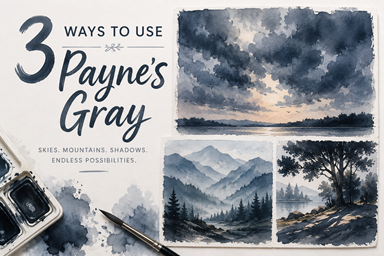
Mood: Cool tones like indigo, Payne’s grey, and cobalt blue evoke cold, misty environments.
Focus: With limited hues, value and shape become more important—perfect for practicing composition.
🧊 Suggested Color Palette
Choose 2–4 of the following:
Payne’s Grey
Indigo
Cobalt Blue
Neutral Tint
Burnt Sienna (for subtle warmth)
Ultramarine Blue
Optional: A touch of white gouache or masking fluid for snow details.
🖼️ Composition Tips
Use horizontal layering: distant tree shapes fade into mist, while foreground trees are darker and sharper.
Leave negative space between branches for a realistic snowy feel.
Vary tree height and thickness for visual interest.
🪄 Step-by-Step: Painting a Snowy Forest
Sketch Lightly (or don't) Plan tree placement, but keep lines minimal—let the paint do most of the work.
Lay a Cool Base Wash Wet the paper and drop in diluted cool tones (Payne’s Grey or Indigo). Let the pigment settle softly. (Graded and variegated washes offer fun variety.)

Add Tree Silhouettes While the paper is damp, use a pointed brush to paint vertical tree shapes. Let some blur into the background.
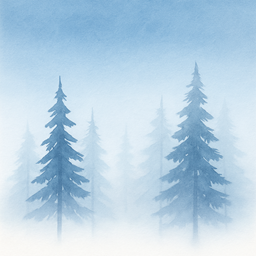
Layer in Depth Once dry, glaze darker tree shapes on top for dimension.

Enhance Add tree layers until your scene has the desired depth. Use a dry brush to drag paint across branches or add highlights with gouache or lifted pigment to add dimension and snow effects.

✨ Finishing Touches
Use a rigger brush to add fine branches
Splatter white for falling snow
Add soft shadows with diluted grey to suggest snowdrifts
🧊 Final Thoughts
Painting a snowy forest doesn’t require a full paint box—just thoughtful color choices and restraint. Let your whites breathe, let your blues speak, and enjoy the quiet power of winter landscapes.