❄️ Snow Without White Paint: How to Paint Winter’s Brightest Scenes Without Reaching for White


If you’ve ever stepped outside on a fresh winter morning, you already know: snow isn’t actually white. It’s reflective, colorful, shifting, and way more interesting than a tube of titanium white can ever capture. So today, let’s talk about how to paint snow without using any white paint at all—and why doing so can actually make your winter paintings look more luminous.
🌡️1. Start With Temperature, Not White

Snow gets its “whiteness” from reflected light. So instead of thinking “white,” look for warm vs. cool temperatures.
Sunny snow? You’ll see buttery yellows, peach highlights, even hints of soft lavender.
Overcast snow? Think calm blue-grays, muted violets, and soft teal shadows.
Your job isn’t to paint “snow.” It’s to paint what the light is doing.
🎨2. Build Your Snow With Pastel Tints
Mix very light versions of your colors instead of defaulting to white.
Try:
Ultramarine + a touch of Burnt Sienna for natural pale shadows
Cerulean + Quinacridone Rose for chilly, luminous tints
Yellow Ochre + just a bit of Naples Yellow Hue for warm light
Let your palette make the snow feel alive.
💜3. Shadows Are the Secret
Snow shadows are where people accidentally flatten the painting. Make them rich and believable.
Use:
Ultramarine + Alizarin Crimson = glowing violet shadows
Phthalo Blue (used sparingly!) + Rose = electric winter blues
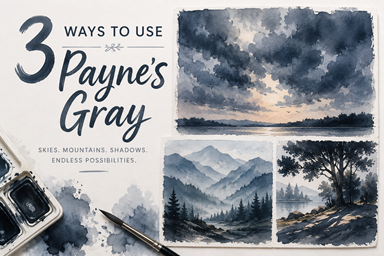
Indigo + Paynes Gray for a stormy, moody day
Paint them soft, layered, and slightly blended at the edges.
✨4. Leave the Paper for Your Brightest “Whites”

Your paper is your white paint. Save it like gold.
Use negative painting to carve:
Sparkling sunlit edges
Ice glints on branches
Crisp snowbanks
The brightest part of a path or trail
Reserve those untouched areas and your snow will glow on its own.
✨5. Glaze to Adjust the Mood

If your snow feels too dull or too dark, don’t add white—glaze a thin veil of color.
A light cobalt wash can cool everything down.
A mango-peach wash creates instant golden sunlight.
A soft violet glaze brings that magical “blue hour” glow.
Glazing keeps the translucency that white paint would kill.
🌨️6. Think Soft Edges Everywhere
Snow is rarely hard-edged. Keep the transitions feathered and gentle. Wet-into-wet is your friend here—let the pigment bloom and blend the way real snow shifts under changing light.
🌬️7. Add Crisp Textures Only Where Needed

Snow becomes believable when you balance soft expanses with tiny, sharp details:
A single blade of grass
A shadow edge under a branch
A crisp fence line catching the light
Those small anchors add realism without cluttering the softness.
Final Thoughts
Painting snow without white paint forces you to really see what’s happening outdoors. And once you start noticing those delicate blues, peaches, and violets woven through the landscape, you’ll realize: snow is actually one of the most colorful subjects you can paint.