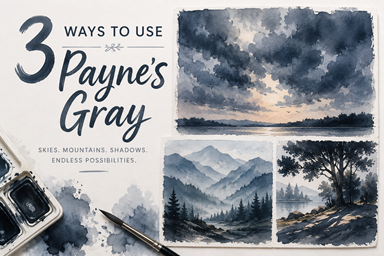
🌀One Color, Three Moods — A Tiny Watercolor Experiment
- LaLa

- Feb 24
- 2 min read

Sometimes we overcomplicate watercolor. Too many tubes. Too many decisions. Too much pressure to make something “good.”
So today keep it simple: one pigment, three moods. No mixing. No palette overwhelm. Just seeing how far one color can stretch when you change water, value, and intention.
And honestly? It’s one of the best watercolor exercises I know.

🫧Soft Atmospheric Wash
This is where watercolor really shines — softness, breath, space.
I loaded the brush with plenty of water and let the pigment float. No forcing edges, no overworking. Just letting the color settle naturally into the paper.
This version usually feels:
calm
misty
a little dreamy
very forgiving
If you tend to overwork (most of us do), this part reminds you that watercolor often looks best when you interfere less.
Think atmosphere, not object.

🌑Moody Dark Version
Same pigment. Completely different mood.
Here I used less water, built layers slowly, and leaned into depth. Letting previous layers dry between passes helps avoid mud while still getting that rich darkness.
This stage teaches:
value control
patience
how powerful a single pigment can be
And emotionally? Dark washes often feel dramatic, quiet, introspective. They can carry a lot of mood without needing detail.
It’s proof that watercolor doesn’t always have to be light and airy — it can be intense too.

🔵Bright Expressive Version
Now the fun one.
Higher pigment load, confident strokes, less fussing. I let brush marks show, embraced edges, and didn’t worry about perfection.
This version feels:
energetic
alive
spontaneous
a little rebellious
Sometimes watercolor needs that freedom. Not everything has to be polished — sometimes the freshness is the beauty.
Why This Exercise Works So Well
Because it quietly teaches a lot without feeling like practice:
water control
pigment strength
emotional impact of value
how mood comes from handling, not just color choice
And it removes the “what should I paint?” question entirely.
Just explore.
If You Try This…
Pick a pigment you already love — or one you’re unsure about.
You might discover:
a new favorite way to use it
unexpected mood shifts
or simply a more relaxed way to paint
And honestly? Those little discoveries add up.