🎨 Mastering Color Harmony: Mixing with a Dominant Hue in Watercolor


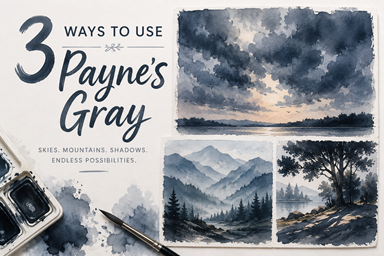
In the world of watercolor, color harmony can make or break a painting. One of the most effective yet underutilized strategies to create visual cohesion is using a master color—a single pigment that appears, even subtly, in most of your mixes. This technique brings unity, mood, and a natural flow to your artwork.
🎯 What Is a Master Color?
A master color (also called a mother color) is one pigment that’s added in small amounts to most, if not all, of your mixes. Think of it as the “thread” that ties your color palette together. Whether you’re painting landscapes, florals, or abstracts, this subtle repetition enhances the visual unity of your work.
🎨 Why Use a Master Color?
Color Cohesion: Even wildly different colors feel related when they share a common component.
Mood Creation: A cool blue or a warm sienna sets a consistent emotional tone.
Efficiency: Reduces color chaos, especially in large or complex compositions.
Personal Style: The master color becomes part of your painting’s fingerprint.
🧪 How to Choose a Master Color
Choose a color based on:
Mood or Season:
Ultramarine or Indigo for a moody or wintery feel
Burnt Sienna for warmth and earthiness
Quinacridone Rose for a romantic or spring tone
Subject Matter:
Cobalt Teal for ocean scenes
Sap Green for forests
Raw Umber for vintage or rustic pieces
Light & Atmosphere:
A soft yellow or greyed blue can simulate specific lighting conditions
🖌️ Mixing in Practice
Let’s say your master color is French Ultramarine (PB29):
Mix it with Burnt Sienna for rich browns
Add to Cadmium Yellow for muted olive greens
Blend with Alizarin Crimson for deep purples
Touch into shadows, skies, and even foliage for subtle continuity

💡 Tip: Use a minimal amount—just enough to tint other pigments without overpowering them.
🧩 Where to Use It
Skies, shadows, and reflections
Neutralizing overly vibrant mixes
Glazing over dry areas to unify tones
Backgrounds and negative space
🖼️ Visual Harmony in Action
Artists like John Singer Sargent and Anders Zorn famously used limited palettes where a dominant hue created atmosphere. You can replicate this in watercolor by keeping your mixes simple and consistent.
🔁 Try This Exercise
Choose one pigment as your master color.
Swatch it with 6–8 other colors on your palette.
Use only those mixes in a quick painting.
Observe the harmony that emerges!
🌈 Final Thoughts
Using a master color doesn’t limit you—it liberates your painting from disjointed color choices and opens the door to cohesive, emotionally resonant work. It’s one of the simplest yet most powerful watercolor secrets.