🎨Painting a Loose Watercolor Goose (Step-by-Step Walkthrough)

Loose watercolor animals are one of those subjects that look effortless — but they’re really about restraint, water control, and knowing when to stop. This little goose demo is a great practice piece because it lets you work soft neutrals, simple shapes, and expressive brushwork without getting lost in feather detail.
Here’s how the painting progresses from sketch to finished piece.

Step 1 — The Bare-Bones Sketch
This stage is just structure.
Keep it ridiculously simple:
Egg shape for the body
Gentle S-curve neck
Small oval head + triangle beak
You’re not drawing feathers, anatomy, or perfection — just placement. If the sketch starts looking tight or polished, loosen it. Light lines, quick hand.
👉 The looser the sketch, the looser the painting tends to stay.
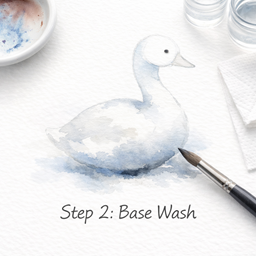
Step 2 — The First Wash
This is where the goose actually appears.
Use a very diluted neutral gray (Ultramarine + Burnt Sienna is a classic mix). Paint one soft wash across the body and neck while leaving bits of white paper showing for light.
Key mindset here: You’re painting light, not color.
Drop a slightly darker tone under the belly while it’s still damp so the form starts rounding without hard edges.

Step 3 — Building Form With Shadows
Now we create dimension without adding detail.
Focus on just a few shadow zones:
Under the neck
Belly curve
Back/tail transition
Soften edges with a damp brush so nothing feels outlined. You want the goose to feel sculpted by water, not drawn by lines.
This step is where most people overwork — keep it minimal.

Step 4 — Feather Suggestions (Not Feathers)
This is expressive mark-making, not rendering.
Add a few broken strokes following the body curve:
Shoulder area
Back of the body
Slight tail texture
Three to six strokes are usually enough. Seriously. More than that and it starts looking stiff.
The magic of loose watercolor is letting the viewer’s brain fill in the rest.

Step 5 — Final Touches & Contrast
These tiny accents bring the goose to life:
Beak color and small eye dot
A darker shadow note to anchor the body
Optional hint of feet or ground shadow
One darkest dark is usually enough. That contrast keeps the painting lively without overworking it.
Then stop. Even if you want to fiddle.
⭐Why This Exercise Works
Painting something like a goose loosely teaches:
Water control without over-detailing
Value relationships instead of line work
Confidence with limited strokes
Letting watercolor behave naturally
It’s honestly less about painting a bird and more about learning how to leave space and trust the medium.
If you try this, loosen it even more than you think you should.